How far away is tourism promoted for Mount St. Helens National Volcanic Monument in our state of Washington? As far away as Australia and New Zealand!
This image, taken from Johnston Ridge, is currently being used in a travel brochure abroad. Johnston Ridge is a great place for wildflower photography in early to mid-July, far earlier than many other areas on west side of the Cascades. Shown here is a meadow of lupine and paintbrush, and several other flowers.
Johnston Ridge is accessed from I-5 near the town of Castle Rock. Follow State Highway 504 52 miles to road end, at the Johnston Ridge Visitor Center.
Many more images from this area can be viewed in my Central and South Cascades Gallery.
As always, thanks for looking!
Sunday, August 10, 2014
Tuesday, August 5, 2014
Flowers at Mount Rainier
Update Aug. 6th: I toured the park today after my original backpacking plan fell through on the west side. Paradise looks ahead of Sunrise for flowers this year, which I have never seen before. I suspect Paradise is going to be looking pretty good in another week.
On the Sunrise side, the flowers look magnificent along the Sunrise road, until shortly before Yakima Park (Sunrise). Then they basically disappear. Strange.
There are no flowers to speak of around Tipsoo Lake, and thus, I would assume it to be the same on the Naches Peak trail, since they have coincided in the past.
My hunch is that this is going to be a down year for flowers due to the dry summer we have had. I hope to be wrong.
It is proving to be a strange year for flowers at Mount Rainier. The flower displays typically associated with early August have not arrived, and likely are another 1-2 weeks out.
How can this be with the early summer we have been blessed with? Most likely, it is the extreme dry spell we have had.
Flowers in the Sunrise and Tipsoo Lakes area, which usually peak in late July, are still not at peak. The same can be said for Spray Park.
Mazama Ridge is still sporting lots of snow.
Flowers at Paradise are just beginning to emerge near the parking lot.
Indian Henry's was still only sporting avalanche lilies a week ago. I suspect the main show is still another week away.
Emerald Ridge has looked very nice in recent images I have seen. This doesn't surprise me as it is usually one of the earliest spots to bloom.
It will be interesting to see how the flower shows play out this year around the mountain. Will the different varieties all be on the same schedule? Or will they be staggered as they sometimes are.
The good news is we still have a lot to look forward to in the coming weeks.
Hope to see you on the trail!
On the Sunrise side, the flowers look magnificent along the Sunrise road, until shortly before Yakima Park (Sunrise). Then they basically disappear. Strange.
There are no flowers to speak of around Tipsoo Lake, and thus, I would assume it to be the same on the Naches Peak trail, since they have coincided in the past.
My hunch is that this is going to be a down year for flowers due to the dry summer we have had. I hope to be wrong.
It is proving to be a strange year for flowers at Mount Rainier. The flower displays typically associated with early August have not arrived, and likely are another 1-2 weeks out.
How can this be with the early summer we have been blessed with? Most likely, it is the extreme dry spell we have had.
Flowers in the Sunrise and Tipsoo Lakes area, which usually peak in late July, are still not at peak. The same can be said for Spray Park.
Mazama Ridge is still sporting lots of snow.
Flowers at Paradise are just beginning to emerge near the parking lot.
Indian Henry's was still only sporting avalanche lilies a week ago. I suspect the main show is still another week away.
Emerald Ridge has looked very nice in recent images I have seen. This doesn't surprise me as it is usually one of the earliest spots to bloom.
It will be interesting to see how the flower shows play out this year around the mountain. Will the different varieties all be on the same schedule? Or will they be staggered as they sometimes are.
The good news is we still have a lot to look forward to in the coming weeks.
Hope to see you on the trail!
Wednesday, July 30, 2014
Discover the East Side of Mount Rainier National Park
The trails off Highway 123 on the east side of Mount Rainier National Park can be the loneliest trails in the park once trails of the high country have become available for hiking. Who wants to be buried in forest when supreme panoramic views can be had of our state's crown jewel, as well as other peaks well beyond the park in every direction? But on days when clouds shroud the high country and limit views, the lower Eastside Trail and spur trails can be at their best.
There are no views of Rainier from these trails. Instead, these trails offer the visual splendor of vibrant greens and the fresh aromas of western red cedar, western hemlock and Douglas fir to captivate the senses. And if that is not enough, the rushing streams and thundering waterfalls may send your senses into overload!Overcast days are the best days to visit this area for photography. The clouds filter the harsh sunlight, creating nice even lighting. Add some mist or drizzle to the equation and you will have a lucky treat indeed. The forests on this side of the mountain are much drier than other areas as they are located east of the Cascade crest. Often when rain is in the forecast for the park, I have arrived here only to find dry cloudy conditions with the sun trying to pop through. In fact, many photography ventures have been cut short when the sun won the battle!
To further reward photographers and hikers alike, Deer Creek, Chinook Creek and the Ohanapecosh River offer numerous waterfalls and cascades to enjoy. Side streams such as Kotsock Creek, Boundary Creek and Olallie Creek provide further opportunities. These streams all have one thing in common; they are swift moving and can be roaring in spring and early summer. Care should be taken as a slip and fall into one of these streams could be very dangerous
Photographers can leave their gradual neutral density filters at home, but should consider a polarizing filter absolutely essential equipment - worth returning home for if forgotten! A polarizer will make the greens and yellows of the forest pop with increased saturation. It will also take the glare of the water, and slow your shutter speed a couple of stops to further blur waterfalls and cascades to give them that nice ribbon effect. I personally use a Singh-Ray warming polarizer and have been very pleased with the results I've gotten. But any polarizer will do the job.Of course, with these slower shutter speeds also comes the necessity of a sturdy, well anchored tripod. Anchored? Yes. The forest floor can often be soft and even spongy, allowing settling of the tripod legs with the slightest of bumps - including the simple act of releasing the shutter button (use the timer function of your camera or better yet, a remote shutter release). Hanging a stuff sack filled with heavy items from the center post of your tripod will help anchor it and minimize undesired movement and camera shake.
There are many access points for the these trails along Highway 123, beginning at Cayuse Pass. Traveling south, just past the tunnel at Deer Creek is the Owyhigh Lakes trailhead. Further south is the Silver Falls cutoff trail. All of these offer their own special features and are worth checking out.
More images from Mount Rainier National Park and surrounding wilderness can be viewed in my Mount Rainier Gallery.
For further photography ideas in the park, be sure to check out my book Mount Rainier, which offers my tips on when and where to photograph in the park and neighboring wildernesses.
And of course, many images from all over the western U.S. and Canada can be found on my website at www.mountainscenes.com.
Happy shooting!
Wednesday, June 25, 2014
In Memory of Karen Sykes, 1945 - 2014
![]() |
| Karen Sykes - photo by Alan Bauer |
I first met Karen in 2007 - March 13th, 2007 to
be exact. It was a special day because
it marked my first time hiking with her and another new friend, Alan
Bauer. Little did I know that both would
become very good friends and colleagues.
I met them at the Preston Park and Ride on this morning, and
immediately knew it was going to be a fun day.
Karen was full of silliness, laughter, and many stories on that
drive. We all were, in fact. I credit Karen for starting it. Karen was also full of questions as she
wanted to learn about me. 3-1/2 hours on the road seemed
to fly by in 15 minutes.
Steamboat Rock was our destination, and it did not
disappoint. We met another friend, Kim
Brown, at the parking lot, and off we went.
For most of us, our goal was the view at the top. For Karen, it was all the exploration on the
way, as she elected to loop around the top, eventually meeting back up with us
at the viewpoint overlooking Banks Lake.
I’m sure she was thinking, “Why the hurry when there is so much more to
see? The views aren’t going
anywhere.” That was Karen.
Karen and I mostly stayed in contact via e-mail, which she
would typically sign Cairn, in jest. I
too became a follower of her Thursday write-ups in the pages of the Seattle
Post-Intelligencer. We didn’t hike
together as much as we would have liked, but we always shared our trip stories
and photos and found time to chat or get together. One of those times was a book party at the
Mountaineers to introduce their new Day Hiking series. Alan Bauer, Dan A. Nelson and Craig Romano
were being featured for their respective books, with each taking turns speaking
about them and later, signing copies.
Karen suggested we attend to support Alan.
We arrived early and ran into our friends Kim Brown and
Steve Payne. The silliness began. Karen stopped us before the door. She wanted to make a dramatic entrance that
would catch Alan off-guard and make him laugh – even embarrass him if
possible. She suggested we enter doing
cartwheels. And she was serious! We shook our heads and said we were NOT doing
cartwheels. So instead, we coupled up,
interlocked arms and walked in stiff as boards, chest held out, two by two, as
if we were royalty walking the carpet, drawing Alan’s laughter. But the moment I remember most is when an
associate we both new saw us, and hurriedly approached and pointedly asked me
how my wife and kids were, while looking at Karen, our arms still hooked
together. I don’t think I ever heard
Karen laugh so hard!
![]() |
| Karen Sykes - photo by Alan Bauer |
I also became Karen’s “go to” IT guy whenever she was having
computer programs. She had a very old
computer – an ancient computer, which was basically full and crawled at a
snail’s pace. Couple that with dial-up
modem that sometimes connected successfully at as high as an 18.8 connection,
and, well, you get the idea. She would
get so frustrated with it at times, and simply have to walk away to calm
down. But if she didn’t have time to
walk away due to a deadline she was working on, my phone rang. And my phone rang often! (And if I didn’t
pick up, well, that is what the redial button was for!) Eventually, my brother built her a new
computer as a gift with components he had laying around. It was nothing special, but to Karen, it was
a hot rod. She needed to wear a seat
belt when she sat down in front of the keyboard! (I suggested we paint flames on the sides.) Karen was in heaven, and simply ecstatic. I still got the panic phone calls
periodically when something didn’t go right, but not nearly as often.
It was while working on her computer one day that Karen learned of a photography book I had recently authored, entitled "Mount Rainier" through Hancock House Publishing. She asked if she could review it for the Seattle PI. I excitedly said yes, and furnished her with a copy. Karen gave it a wonderful review, supporting it with several of my pictures, and recommended it to all her readers. It was the first review of my book, and the one I most cherish to this day. I still have the original newspaper copy (the review can still be easily found online).
Then one day, Karen’s walls came crashing down. She was notified by the Seattle PI that her services would no longer be needed.
Karen’s heart broke. She
contacted me right away and confided in me all her emotions and fears. She was surprised, hurt, angry, worried,
and…afraid. Writing about the outdoors
was her life and passion, and after 13 years with the PI, it was all being
taken away from her in one sudden swoop.
She didn’t see it coming.
Karen needed to write and she didn’t know what she was going
to do. She not only needed to write, she
needed to write with purpose. It had to
be beneficial and be appreciated by others.
She was afraid of being forgotten.
Once the storm and panic settled, Karen realized she needed
to keep her writing in the public eye.
She got the idea to start a blog, and enlisted my help to get it set
up. It was slow going at first, and
there was much frustration when things didn’t work or “disappeared when she hit
a button or something”. But the results
of her turmoil speak for themselves. If
you haven’t perused her pages, I encourage you to do so.
It was very soon after that Karen began hearing the rumors. Her termination from the PI was part of a
much bigger thing. The PI was closing
its doors. This was a tremendous shock
to Karen, and her hurt was replaced by sadness and concern for her friends and
colleagues that were about to suffer the same fate as her. The world could be cruel at times.
The PI announced a final good-bye party, attended by invite
only. Karen received an invite, but
couldn’t decide if she wanted to attend.
She felt uncomfortable with it, yet part of her felt the closure and
seeing others, some possibly for the last time, was important. At the 11th hour, she hesitantly
decided she wanted to go – if I would be her guest. I was happy to oblige.
![]() |
| Karen Sykes - photo by Alan Bauer |
The event was not what we expected. It was a party and it was festive! I wrote about it shortly afterward. Karen only knew a handful of people there,
since she freelanced from her home and didn’t have much interaction with those
in the office. But we quickly found out
that many, many people knew of her and were anxious to meet her! Karen was a bit embarrassed by all the
attention, but her spirits were soaring through the ceiling. Her smile was a permanent fixture on her face
the entire evening. I was so happy for
her.
As we all knew she would, Karen forged ahead with her
writing and picked up many new projects.
She began contributing to the Seattle Times and other publications. Visit Rainier soon became a favorite client
for her, offering her reason to get out on the trail often.
Karen had other interests as well. She liked to write poetry and aspired to
someday have it published in a book. She
was an avid runner around West Seattle, recently logging 13 mile runs. Yes, 70 years old and running the equivalent
of half marathons. Karen wasn’t one for
sitting around. She would go stir crazy.
On June 18th, Karen met her fate doing what she
loved. Her final adventure took place in
Mount Rainier National Park, on a hike to Owyhigh Lakes with her boyfriend
Bob. Karen did not return.
There are more questions than answers as to what happened on
that day. And most likely, many of those
answers will never come.
I will miss Karen. I
will miss her joyous smile and infectious laugh. I will miss her quest for adventure and
seeking to notice details along the way that others might overlook. I will miss her kind heart and goodwill to
those around her whom she found so important in her life. And, I’ll miss those damn phone calls.
Rest in peace, Karen.
You have touched the lives of more than you ever could have imagined,
and will be sorely missed.
Memorial Information
Celebrate the life and legacy of Karen Sykes at the Seattle Mountaineers on July 14, 2014. Share stories and experiences with friends at 6:30 PM, with a program beginning at 7:00 PM.
Please send photos of Karen Sykes for incorporation in a slide show to Heidi Walker at fotogirl.heidi@gmail.com
And don't forget to share reminiscences of Karen at NW Hikers Trail Talk or at https://www.mountaineers.org/blog/karen-sykes-shared-her-love-for-trails-with-thousands
See you there.
Please send photos of Karen Sykes for incorporation in a slide show to Heidi Walker at fotogirl.heidi@gmail.com
And don't forget to share reminiscences of Karen at NW Hikers Trail Talk or at https://www.mountaineers.org/blog/karen-sykes-shared-her-love-for-trails-with-thousands
See you there.
Don
Wednesday, May 7, 2014
Butch Cassidy Festival at the Wyoming Territorial Prison State Historic Site
Butch Cassidy, or Robert Leroy Park as he was born, was a
notorious bank robber, train robber, and leader of the Wild Bunch Gang in the
Old West. He grew up near Salt Lake
City, Utah, but later lived in Colorado, Montana and Wyoming.
![]() |
| Warrior Peak in Cirque of the Towers. |
In 1890, Cassidy purchased a ranch near Dubois,
Wyoming. The ranch was across the state
from the notorious Hole-in-the-wall, a natural geographical formation that
outlaws commonly used for protection and cover.
Many suspect Cassidy’s ranching, which he was never financially
successful at, was simply a front for illegal activities with Hole-in-the-Wall
outlaws.
In 1894, Cassidy was arrested in Lander, Wyoming, for
stealing horses and possibly for running a protection racket among the local
ranchers. He served 18 months in the
Wyoming State Prison in Laramie – the only prison to ever incarcerate Cassidy.
The Wyoming State Prison is one of the oldest buildings in
Wyoming, having been built in 1872. It
first served as a federal penitentiary before becoming a state prison. Today, the facility is open to the public,
designated as the Wyoming Territorial Prison State Historic Site.
The Wyoming Territorial Prison State Historic Site is open
daily from May 1st through October 30th. It offers both guided and self-guided tours
for a small admission fee.
![]() |
| Windy Peak reflected in Cook Lake at Sunrise. |
Beginning June 14th, the prison will host the Butch
Cassidy Festival. A special dedication
of their new exhibit “Butch Cassidy: Who
Was That Guy?” will happen at this time.
I am proud to say that two of my images from the Wind River Range
will be a central part of the display, celebrating the very area that Butch Cassidy called home.
The first image is of Warrior Peak above paintbrush in Cirque of the Towers, a popular rock climbing destination and a favorite area for photographers and backpackers.
The second image is from a much less visited, yet highly
scenic area on the east side of the range.
The scene is Windy Peak reflected in remote Cook Lake at sunrise. Cook Lake is located above Smith Lake and the Popo Agie River valley.
You can view these images and more in my Wind River Gallery.
Thanks for visiting!
You can view these images and more in my Wind River Gallery.
Thanks for visiting!
Tuesday, April 29, 2014
Palouse Falls, the Official State Waterfall of Washington State!
Palouse Falls is a magnificent waterfall located along the
Palouse River in the southwest region of Washington State, about 4 miles
upstream from its confluence with the Snake River. It resides in Palouse Falls State Park, a
park that provides full viewing access to the falls from a viewing platform and
a paved path along the canyon rim.
The falls are 198 feet in height, and owe their history to the
great Missoula Floods that swept across the Columbia River Plateau
periodically. Previously, the river
flowed through the Washtucna Coulee to the Columbia River. This coulee is now dry. During the Pleistocene epoch, the Missoula
Floods diverted the river over the south valley wall of the original canyon,
channeling a new course to the Snake River, and creating Palouse Falls in the
process.
The waterfall seems to be rapidly gaining in popularity in
recent years. A primitive road full of
pot holes used to access the park. That
road has been graded and oiled now, and RVs and tour buses can be commonly seen
in the parking lot. Thanks to some
Washtucna elementary school students who lobbied the state legislature, Palouse
Falls became the official state waterfall of Washington State earlier this year
– February 12, 2014 to be exact. This
will surely pick the curiosity of Washington residents who have not yet visited
this waterfall.
I find the waterfall
is best viewed and photographed in the spring time when water volume is at its
peak – April and May are ideal. Early
May brings the addition of wildflowers to the area. Snakes are also common beginning in mid-April
or so (be careful!). By summer the falls
can be but a trickle in comparison.
On sunny spring days, a beautiful rainbow forms at the base
of the waterfall in mid afternoon. This
is my favorite time to photograph the falls.
You can position the rainbow where you wish simply by changing your
vantage point. Of course, the rainbow
also moves as the angle of the sun changes.
Definitely bring a polarizing filter to capture the vibrant colors of this
light spectrum.
If you are fortunate to have interesting clouds in the sky
in the morning or evening, you’ll have a great opportunity to compose a
panoramic image encompassing the waterfall, entire pool and even the canyon
downstream if you choose. In order to
capture the full dynamic range, you will need to bring split neutral density
filters for this, shoot HDR, or employ the method of stacking images in
Photoshop.
I attempted some night photography during my last visit in
April, but there was too much light pollution nearby to pull this off. I would love to hear if anyone has been
successful with this.
Finally, don't forget to check out the periodic trains, best viewed from the bridge before the parking lot. The trains run pretty regularly and you can usually hear their low rumble well in advance if you pay attention. Watching the nearby train traffic light can tip you off as to the direction of the next train.
The railroad tracks are quite the engineering feat. Since trains require relatively flat track, they can't handle the rolling hills, bluffs and ravines of the Palouse very well. So instead, a route was carved (blasted) into the plateau to form an open top tunnel.
As I wrote about in a recent post, yellow-bellied marmots are everywhere around the falls and very fun to watch and photograph. If you missed it and don't see it below, you can find the post here.
Finally, don't forget to check out the periodic trains, best viewed from the bridge before the parking lot. The trains run pretty regularly and you can usually hear their low rumble well in advance if you pay attention. Watching the nearby train traffic light can tip you off as to the direction of the next train.
The railroad tracks are quite the engineering feat. Since trains require relatively flat track, they can't handle the rolling hills, bluffs and ravines of the Palouse very well. So instead, a route was carved (blasted) into the plateau to form an open top tunnel.
As I wrote about in a recent post, yellow-bellied marmots are everywhere around the falls and very fun to watch and photograph. If you missed it and don't see it below, you can find the post here.
You may view more images of Palouse Falls, the rolling hills around the Palouse, and more in my Central and Eastern Washington Gallery.
In the meantime, here are a few images from my recent visit. Enjoy!
Wednesday, April 23, 2014
Lost Basin, Olympic National Park.
![]() |
| Lupine at Lost Pass, with Sentinel Peak and Hayden Pass beyond. |
The trail itself follows the steep walls of the Dosewallips River through lush forest and across many stream crossings. There are many campsites along the way, beginning with Dose Forks at 1.4 miles, and ending with Dose Meadows at 12.6 miles, shortly before the trail climbs to Hayden Pass. From here, one can leave the main trail and follow a steep, primitive trail up to Lost Pass and meander into the beautiful rolling meadows of Lost Basin.
In early August, the flower show is profuse here and bears, goat and deer roam the meadows. I wrote an article entitled "Finding Lost Basin" for Washington Trails Magazine a few years ago, detailing a particularly enjoyable trip.
The image above is one of my favorites from the trip, and is appearing in the May issue of Backpacker Magazine.
More images from this beautiful area and other highly scenic places in Olympic National Park can be viewed in my Olympic Gallery.
See you on the trail!
Thursday, April 17, 2014
The Fascinating Yellow-bellied Marmot
Marmots, or “whistle pigs” as they are sometimes called, are
large squirrels. These mammals burrow
underground and hibernate during the winter months. They are highly social animals that use loud
whistles to communicate with one another, especially when alarmed.
I recently enjoyed photographing yellow-bellied marmots
while visiting Palouse Falls State Park.
I find marmots in general to be very fun and entertaining to watch. As already mentioned, they are highly social
animals and also very curious.
Palouse Falls State Park offers the opportunity to photograph the marmots while using the falls as a backdrop, adding an interesting element to your composition and helping tell a story. The best place to do this is long the trail that explores the cliff edge above the falls, just a short walk from the campground and picnic area. There is no fence along this section and a slip and fall would be disastrous if not fatal, so be careful!
Along the paved path in the developed area of the park (and fenced!) is another great place for close-ups of these critters, as there is a den with a large family (as of this writing) of 7 or 8 - many young and playful. They are found just the other side of the fence, and very close.
One word of caution about this area - it is rattlesnake country! Keep alert while walking the paths and walk "heavy" by scuffling your feet periodically.
There are many other places in our state to view these animals as well. Hikers and backpackers will find them most everywhere on and off trail in our mountains. But if you are not a hiker and want some easily accessible places to view them, some places I recommend are Paradise and Sunrise Visitor Centers at Mount Rainier National Park, Hurricane Ridge in Olympic National Park, Artist Point in the North Cascades, and almost any rocky, open area in eastern Washington (such as Palouse Falls!)
When photographing wildlife, make sure you take some time to simply watch and enjoy their behavioral habits as well. This is important. The more you understand them, the more your photographs will tell their story and not just be a snapshot.
I hope to have more wildlife images up on my website again soon. Please feel free to check it out at www.mountainscenes.com.
Thanks for looking!
Here in Washington State, we are fortunate to be home to
three different varieties of marmots, including a unique species found nowhere
else – the Olympic marmot. The Olympic
marmot resides at middle elevations on the Olympic Peninsula.
In the Cascade Range, one can find the hoary marmot at middle to high elevations. While they can be found almost anywhere in
the range, one of the most popular places to view them might be Mount Rainier
National Park.
Central and Eastern Washington is home to the ever-popular
yellow-bellied marmot. This is the
widest ranging marmot, seen throughout most of the western United States and
southwestern Canada. It is commonly seen at lower elevations such as steppes, fields and higher up in alpine meadows.
I recently enjoyed photographing yellow-bellied marmots
while visiting Palouse Falls State Park.
I find marmots in general to be very fun and entertaining to watch. As already mentioned, they are highly social
animals and also very curious.
Not much patience is needed if photographing them in a large concentrated area. Even if they scurry off to hide, their curiosity always seems to bring them back out to check on things in short time. Of course, if you are in an area where they have grown accustomed to people, they may have little fear of you and even approach you (this would suggest they are being fed by people, which is never a good idea and I would highly discourage others from doing so).
As for most wildlife photography, soft light works best. This can be found on cloudy days, or in early morning or late evening on sunny days.
These images were captured with a 70-200mm 2.8 lens and 2x teleconverter at F9. I like this aperture as it keeps the entire animal in focus while blurring the background for less distraction. Using a 2.8 aperture setting, for instance, will often blur part of the subject as well (e.g; the nose will be in focus but the hind feet not be). An aperture setting of F32 will bring everything near and far into focus, and often distract the viewer's eyes from the subject. Of course, it all comes down to personal preference and what you are trying to achieve.
Palouse Falls State Park offers the opportunity to photograph the marmots while using the falls as a backdrop, adding an interesting element to your composition and helping tell a story. The best place to do this is long the trail that explores the cliff edge above the falls, just a short walk from the campground and picnic area. There is no fence along this section and a slip and fall would be disastrous if not fatal, so be careful!Along the paved path in the developed area of the park (and fenced!) is another great place for close-ups of these critters, as there is a den with a large family (as of this writing) of 7 or 8 - many young and playful. They are found just the other side of the fence, and very close.
One word of caution about this area - it is rattlesnake country! Keep alert while walking the paths and walk "heavy" by scuffling your feet periodically.
There are many other places in our state to view these animals as well. Hikers and backpackers will find them most everywhere on and off trail in our mountains. But if you are not a hiker and want some easily accessible places to view them, some places I recommend are Paradise and Sunrise Visitor Centers at Mount Rainier National Park, Hurricane Ridge in Olympic National Park, Artist Point in the North Cascades, and almost any rocky, open area in eastern Washington (such as Palouse Falls!)
When photographing wildlife, make sure you take some time to simply watch and enjoy their behavioral habits as well. This is important. The more you understand them, the more your photographs will tell their story and not just be a snapshot.I hope to have more wildlife images up on my website again soon. Please feel free to check it out at www.mountainscenes.com.
Thanks for looking!
Friday, April 4, 2014
Spring Photography Ideas Around the Pacific Northwest
Spring has arrived in the Pacific Northwest, which means it's time to get the camera out for some fresh air! There are lots of places begging to be visited in the spring months, so I thought I would list some of my favorites.
The State Capital Building (or Legislative Building) is a beautiful place to visit in the spring time, especially if you can catch the cherry blossoms and daffodils in mid to late March, or the tulips in April. Early morning will provide relative peace and quiet before the masses arrive later in the day.
The University of Washington campus is also an excellent place to catch the cherry blossoms in late March or early April.
The Washington Park Arboretum and Japanese Garden are beautiful in the spring time, particularly from mid-March to early May. You will want to head to Rhododendron Glen and walk Azalea Way. Unfortunately for photographers, the Japanese Garden has restricted hours, charges admission, and tripods are not allowed (though monopods are). Still, I understand it to be a must visit!
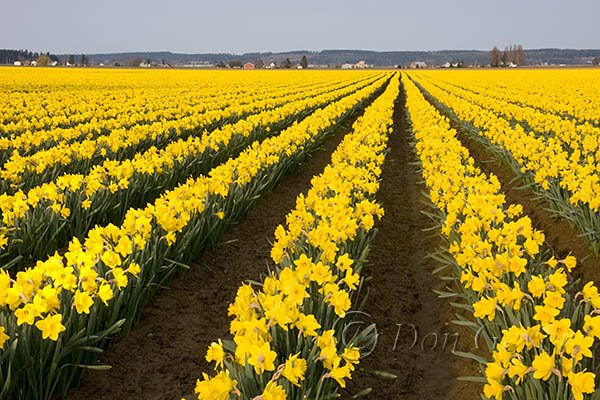
The Skagit Valley is popular in the spring for a reason - fields upon fields of flowers! The blooms start in late March with the daffodils. Because they are not nearly as popular as the tulips, this is a relatively quiet time to visit, and the rewards are great. You might be surprised at how many different varieties of daffodils there actually are. Definitely dress for wet weather and muddy fields this time of year. Rubber boots are recommended. Be sure to check out the bloom map when planning your visit.
In early to mid-April, things get crazy around Mount Vernon with the arrival of the tulips, and visitors from around the world. Weekends in particular can be a mad house. But if you arrive early in the morning, you can still get a few hours of rewarding photography before the masses arrive. I recommend arriving before sunrise and photographing the fields. Again, refer to the bloom map. By mid-morning, you will want to visit RoozenGaarde and/or Tulip Town before the lines get too long.
Sunset is also a fantastic time to photograph the fields. Admittedly, I've never lasted this long! By late morning or noon, I am always spent and ready to call it a day. But one of these days I am going to forgo the early morning and plan a late visit just for this purpose.
Palouse Falls is now our official state waterfall. Have you been there? Why not? It's a beautiful state park on the eastern side of Washington - southeastern, to be exact.
April and early May are excellent times to visit this majestic waterfall. The weather is typically nice more times than not, and the heat of summer has not hit yet. The cooler days of April are still a bit chilly for rattlesnakes liking, but the warmer days of May can be a different story.
Palouse Falls State Park is a 105 acre park that offers a nice picnic area, overnight tent camping on a first come, first served basis, and of course, the dramatic view of the waterfall itself. It's a bit off the main road (dirt road access), and not recommended for trailers or RV's. The park itself is stunning.
On sunny days in the spring, a rainbow forms at the base of the falls in late afternoon.
If you are into waterfalls - and I mean lots of them, there is no better destination than the Columbia River Gorge National Scenic Area to the south of us. Just a short distance east of Portland (16 miles) the waterfalls begin. Be sure and drive the Columbia River Gorge Highway, both for the history and the views! This highway stretches from Troutdale to Dobson, OR and provides direct access to most of the waterfalls.
The most popular waterfall in the gorge is Multnomah Falls, because of its picturesque postcard appearance (and it has appeared on many a postcard!). Unfortunately, the Benson Bridge which famously spans this graceful waterfall was heavily damaged this past winter, and is currently closed for repair work. This simply means you can't hike the trail to the top. You can still enjoy the famous view from the bottom!
Also nearby are Latourell Falls, Horsetail Falls, Ponytail Falls, Elowah Falls, McCloud Falls, Triple Falls, Wahclella Falls, Wahkeena Falls, Punch Bowl Falls, Bridal Veil Falls...well, you get the picture!
There are waterfalls for every interest and ability. Some can be viewed from the parking lot, some require a short walk to a viewing point, and others require a short hike up a trail through beautiful forest.
To get the most out of your visit photography wise, I would plan your visit for a cloudy, overcast day. This allows for even lightning and one doesn't have to hassle with the contrasting shadows and brightness of sunny days.
While you're down there, don't forget to jump over to the Washington side of the gorge and visit Beacon Rock State Park and the Stonehenge Memorial in Mayhill, honoring our war veterans. It's a full size, astronomically-aligned replica of the original Stonehenge, completed in 1929.
Stonehenge is best photographed under blue skies, hopefully with a cloud or two present to make the sky more interesting.
Smith Rock State Park in Bend, OR might be a little further than some people want to drive, but I can promise you won't be disappointed.
This beautiful park might be most famous amongst rock climbers for its challenging routes on excellent quality rock. But it really offers something for everyone with its network of hiking trails and supreme views of its giant monoliths. Keep an eye out for rattlesnakes as they are very common here. There is no camping here, other than the "parking lot" offered to rock climbers.
Finally, east of Bend, there is the John Day Fossil Beds National Monument. More specifically, the Painted Hills Unit located about 9 miles northwest of Mitchell, OR. This unit covers 3,132 acres and offers a short boardwalk trail, the main viewpoint trail (where these pictures were taken) and a longer trail to a grand viewpoint overlooking the entire area.
Camping is primitive in this area, though one has the option of camping in the city park in downtown Mitchell, believe it or not!
As for photographing the painted hills, the best time is in the evening shortly before sunset. This is when the colors are at their best. And if you are lucky enough to have some nice, dark storm clouds off in the distance to the east - even better!
Why spring for this year around attraction? Because flowers put on a display in early May.
Well, there they are - some of my favorite spring photography destinations in the Pacific Northwest. I hope you will have the opportunity to visit some, if not all these places in the coming years.
As always, feel free to contact me with specific questions.
If you wish to view more pictures, visit my galleries at www.mountainscenes.com.
Thanks for looking!
The State Capital Building (or Legislative Building) is a beautiful place to visit in the spring time, especially if you can catch the cherry blossoms and daffodils in mid to late March, or the tulips in April. Early morning will provide relative peace and quiet before the masses arrive later in the day.
The University of Washington campus is also an excellent place to catch the cherry blossoms in late March or early April.
The Washington Park Arboretum and Japanese Garden are beautiful in the spring time, particularly from mid-March to early May. You will want to head to Rhododendron Glen and walk Azalea Way. Unfortunately for photographers, the Japanese Garden has restricted hours, charges admission, and tripods are not allowed (though monopods are). Still, I understand it to be a must visit!
The Skagit Valley is popular in the spring for a reason - fields upon fields of flowers! The blooms start in late March with the daffodils. Because they are not nearly as popular as the tulips, this is a relatively quiet time to visit, and the rewards are great. You might be surprised at how many different varieties of daffodils there actually are. Definitely dress for wet weather and muddy fields this time of year. Rubber boots are recommended. Be sure to check out the bloom map when planning your visit.
In early to mid-April, things get crazy around Mount Vernon with the arrival of the tulips, and visitors from around the world. Weekends in particular can be a mad house. But if you arrive early in the morning, you can still get a few hours of rewarding photography before the masses arrive. I recommend arriving before sunrise and photographing the fields. Again, refer to the bloom map. By mid-morning, you will want to visit RoozenGaarde and/or Tulip Town before the lines get too long.
Palouse Falls is now our official state waterfall. Have you been there? Why not? It's a beautiful state park on the eastern side of Washington - southeastern, to be exact.
April and early May are excellent times to visit this majestic waterfall. The weather is typically nice more times than not, and the heat of summer has not hit yet. The cooler days of April are still a bit chilly for rattlesnakes liking, but the warmer days of May can be a different story.
Palouse Falls State Park is a 105 acre park that offers a nice picnic area, overnight tent camping on a first come, first served basis, and of course, the dramatic view of the waterfall itself. It's a bit off the main road (dirt road access), and not recommended for trailers or RV's. The park itself is stunning.
On sunny days in the spring, a rainbow forms at the base of the falls in late afternoon.
If you are into waterfalls - and I mean lots of them, there is no better destination than the Columbia River Gorge National Scenic Area to the south of us. Just a short distance east of Portland (16 miles) the waterfalls begin. Be sure and drive the Columbia River Gorge Highway, both for the history and the views! This highway stretches from Troutdale to Dobson, OR and provides direct access to most of the waterfalls.
The most popular waterfall in the gorge is Multnomah Falls, because of its picturesque postcard appearance (and it has appeared on many a postcard!). Unfortunately, the Benson Bridge which famously spans this graceful waterfall was heavily damaged this past winter, and is currently closed for repair work. This simply means you can't hike the trail to the top. You can still enjoy the famous view from the bottom!
Also nearby are Latourell Falls, Horsetail Falls, Ponytail Falls, Elowah Falls, McCloud Falls, Triple Falls, Wahclella Falls, Wahkeena Falls, Punch Bowl Falls, Bridal Veil Falls...well, you get the picture!
There are waterfalls for every interest and ability. Some can be viewed from the parking lot, some require a short walk to a viewing point, and others require a short hike up a trail through beautiful forest.
To get the most out of your visit photography wise, I would plan your visit for a cloudy, overcast day. This allows for even lightning and one doesn't have to hassle with the contrasting shadows and brightness of sunny days.
While you're down there, don't forget to jump over to the Washington side of the gorge and visit Beacon Rock State Park and the Stonehenge Memorial in Mayhill, honoring our war veterans. It's a full size, astronomically-aligned replica of the original Stonehenge, completed in 1929.
Stonehenge is best photographed under blue skies, hopefully with a cloud or two present to make the sky more interesting.
Smith Rock State Park in Bend, OR might be a little further than some people want to drive, but I can promise you won't be disappointed.
This beautiful park might be most famous amongst rock climbers for its challenging routes on excellent quality rock. But it really offers something for everyone with its network of hiking trails and supreme views of its giant monoliths. Keep an eye out for rattlesnakes as they are very common here. There is no camping here, other than the "parking lot" offered to rock climbers.
Finally, east of Bend, there is the John Day Fossil Beds National Monument. More specifically, the Painted Hills Unit located about 9 miles northwest of Mitchell, OR. This unit covers 3,132 acres and offers a short boardwalk trail, the main viewpoint trail (where these pictures were taken) and a longer trail to a grand viewpoint overlooking the entire area.
Camping is primitive in this area, though one has the option of camping in the city park in downtown Mitchell, believe it or not!
As for photographing the painted hills, the best time is in the evening shortly before sunset. This is when the colors are at their best. And if you are lucky enough to have some nice, dark storm clouds off in the distance to the east - even better!
Why spring for this year around attraction? Because flowers put on a display in early May.
Well, there they are - some of my favorite spring photography destinations in the Pacific Northwest. I hope you will have the opportunity to visit some, if not all these places in the coming years.
As always, feel free to contact me with specific questions.
If you wish to view more pictures, visit my galleries at www.mountainscenes.com.
Thanks for looking!
Thursday, February 27, 2014
Mount Rainier - A Pacific Northwest Landmark with Worldwide Recognition
Mount Rainier looms majestically over the Puget Sound area, attracting the eyes and hearts of many Washingtonians. For this very reason it is a popular publishing subject for many marketing companies - not just in the Pacific Northwest, but worldwide.
If you've ever visited Mount Rainier National Park in the summertime, you know that it draws visitors from around the globe, and rightly so.
We are fortunate to have such an unmistakable icon right here in the Pacific Northwest. Several of them in fact. You could easily add Mount St. Helens, the Space Needle and Pike Place Market to the list as well. There are more.
But there is something special about Mount Rainier that captures the curiosity, imagination and dreams of people. And for that reason, it serves as a highly marketable subject.
These images are my most recent of Mount Rainier to catch the interest of a marketing company, for use in their literature through 2016.
The top image was taken several years ago from the Sourdough Trail above Sunrise. If you've never been, go! The best time is between late July and September. There are many hikes that radiate from this area, all recommended.
The lower image was taken just last summer before the snow melt-out at Upper Tipsoo Lake. This lake is just off Highway 410 near Chinook Pass. It has grown popular amongst photographers over the last decade or so, due to its easy access and magnificent views, including the obvious reflection shot at sunrise.
Many more images of Mount Rainier National Park and the surrounding wilderness areas of Glacier View and Clearwater can be viewed in my Rainier Gallery.
You may also view images from many other locations around the western U.S. and Canada on my website at www.mountainscenes.com.
Thanks for looking. I really appreciate it.
If you've ever visited Mount Rainier National Park in the summertime, you know that it draws visitors from around the globe, and rightly so.
We are fortunate to have such an unmistakable icon right here in the Pacific Northwest. Several of them in fact. You could easily add Mount St. Helens, the Space Needle and Pike Place Market to the list as well. There are more.
But there is something special about Mount Rainier that captures the curiosity, imagination and dreams of people. And for that reason, it serves as a highly marketable subject.
![]() |
| Mount Rainier reflected in Upper Tipsoo Lake. |
The top image was taken several years ago from the Sourdough Trail above Sunrise. If you've never been, go! The best time is between late July and September. There are many hikes that radiate from this area, all recommended.
The lower image was taken just last summer before the snow melt-out at Upper Tipsoo Lake. This lake is just off Highway 410 near Chinook Pass. It has grown popular amongst photographers over the last decade or so, due to its easy access and magnificent views, including the obvious reflection shot at sunrise.
Many more images of Mount Rainier National Park and the surrounding wilderness areas of Glacier View and Clearwater can be viewed in my Rainier Gallery.
You may also view images from many other locations around the western U.S. and Canada on my website at www.mountainscenes.com.
Thanks for looking. I really appreciate it.
Tuesday, January 14, 2014
The Magic of Cannon Beach in Winter
Cannon Beach is one of those places you just can't seem to get enough of. The area offers so much to visitors. It is one of the choice destinations on the Oregon coast, offering sandy beaches, sea stacks, nearby state parks, family lodging, nice restaurants, tourist shops and most all services available within walking distance of your place of stay.
It's a great place to take the family; the beach is perfect for kids and pets to play, beachcombing at low tide, a romantic walk in the evening, and of course, the chance to break out the photography gear. My personal experience? The former allows the latter!
While I have visited Cannon Beach many times during the spring and summer months, I most recently enjoyed it with family over the holidays. It was our favorite visit to date.
Winter is a great time in general to visit; the crowds are gone, lodging is very reasonable (often half price), and the air is much clearer and the skies so much more interesting. In summer, the warm air tends to bring fog in the mornings and evenings. In winter, the air stays cool and the views clear for those dramatic sunsets. Or, maybe you want to storm watch, which was our original intention.
I'm going to plug my favorite place to stay, Hallmark Resort. It is located right on the beach and has the closest lodging to Haystack Rock, has direct beach access, is pet friendly, is located on the edge of downtown so that you can walk to all amenities, and has an indoor pool, spa, sauna, exercise room and more to keep the family entertained. The rooms also have a full kitchen so that you can cook your own meals if you wish (I did a prime rib in the oven for Christmas dinner).
For the photographer, this is a great place to keep your family busy while you get down to business! Cannon Beach is in close proximity to two of the most iconic images on the Oregon coast: Haystack Rock & The Needles, and Crescent Beach from Ecola State Park.
As mentioned earlier, one of the big differences in the winter is the lack of morning and evening fog on the horizon and even engulfing the beach. The other noticeable difference is that the sun sets so much further to the south, lighting up the southern sky and possibly encouraging you to set up for a slightly different composition than you would in the summer.
The classic composition here is of Haystack Rock and The Needles at sunset silhouetted against a dynamic, radiant evening sky. Even better is to catch the reflection of the scene in the water along the beach as the tide recedes. Watch out for those sneaker waves; they typically aren't strong enough here to be dangerous, but they can make you very wet on an already chilly evening if you are not careful.
Spending multiple evenings here will allow you a little more freedom to play with placing the sun at different locations as it sets. You may also be rewarded with much different patterns in the sky, or dramatically different skies altogether.
While you may have some small crowds to deal with in the evening (nothing like in summer, mind you), you will find their numbers directly proportionate to the temperature. As the sun sets and the temps drop, so do the people. When the best light arrives after the sun has set (and pink clouds emerge), you may be all alone.
Morning can also be an inviting time to photograph Cannon Beach in the winter, so don't forget to set your alarm! This is best done with light clouds present in the sky to catch the suns early rays. Again, the colors can be reflected in the water thanks to the flat, hard-packed sand on the beach.
While the entire sky is subject to fantastic morning color, fishing boats with their bright lights are common just out to sea, mainly directly west and northwest. A south facing composition catches the most dramatic early light and avoids these unwanted objects. As the morning grows lighter, the clouds to the west and northwest will turn pink to purple and the boats will be less noticeable, if not entirely undetectable.
Don't forget to visit Ecola State Park, just a short drive north from Cannon Beach. Photographs can be taken almost from the parking lot, though walking the short paved trail west will offer a wider view. Cresent Beach is best photographed from here in late afternoon and at sunset, hopefully with some clouds on the horizon to catch light. In winter, this sunrises can also be attractive from here.
There are other places to visit and photograph within Ecola State Park as well - don't forget to check out Indian Beach and the views out to Tillimook Lighthouse!
I recommend a mid-telephoto lens, such as a 24-70 lens for these locations. I also recommend both a 2 and 3-stop reverse gradual neutral density filter for shooting the sunsets.
I will be adding these and more images to my Oregon Coast Gallery soon. In the meantime, check out images from here and the entire Oregon coast here.
As always, thanks for viewing!
It's a great place to take the family; the beach is perfect for kids and pets to play, beachcombing at low tide, a romantic walk in the evening, and of course, the chance to break out the photography gear. My personal experience? The former allows the latter!
While I have visited Cannon Beach many times during the spring and summer months, I most recently enjoyed it with family over the holidays. It was our favorite visit to date.
Winter is a great time in general to visit; the crowds are gone, lodging is very reasonable (often half price), and the air is much clearer and the skies so much more interesting. In summer, the warm air tends to bring fog in the mornings and evenings. In winter, the air stays cool and the views clear for those dramatic sunsets. Or, maybe you want to storm watch, which was our original intention.
I'm going to plug my favorite place to stay, Hallmark Resort. It is located right on the beach and has the closest lodging to Haystack Rock, has direct beach access, is pet friendly, is located on the edge of downtown so that you can walk to all amenities, and has an indoor pool, spa, sauna, exercise room and more to keep the family entertained. The rooms also have a full kitchen so that you can cook your own meals if you wish (I did a prime rib in the oven for Christmas dinner).
For the photographer, this is a great place to keep your family busy while you get down to business! Cannon Beach is in close proximity to two of the most iconic images on the Oregon coast: Haystack Rock & The Needles, and Crescent Beach from Ecola State Park.
As mentioned earlier, one of the big differences in the winter is the lack of morning and evening fog on the horizon and even engulfing the beach. The other noticeable difference is that the sun sets so much further to the south, lighting up the southern sky and possibly encouraging you to set up for a slightly different composition than you would in the summer.
The classic composition here is of Haystack Rock and The Needles at sunset silhouetted against a dynamic, radiant evening sky. Even better is to catch the reflection of the scene in the water along the beach as the tide recedes. Watch out for those sneaker waves; they typically aren't strong enough here to be dangerous, but they can make you very wet on an already chilly evening if you are not careful.
Spending multiple evenings here will allow you a little more freedom to play with placing the sun at different locations as it sets. You may also be rewarded with much different patterns in the sky, or dramatically different skies altogether.
While you may have some small crowds to deal with in the evening (nothing like in summer, mind you), you will find their numbers directly proportionate to the temperature. As the sun sets and the temps drop, so do the people. When the best light arrives after the sun has set (and pink clouds emerge), you may be all alone.
Morning can also be an inviting time to photograph Cannon Beach in the winter, so don't forget to set your alarm! This is best done with light clouds present in the sky to catch the suns early rays. Again, the colors can be reflected in the water thanks to the flat, hard-packed sand on the beach.
While the entire sky is subject to fantastic morning color, fishing boats with their bright lights are common just out to sea, mainly directly west and northwest. A south facing composition catches the most dramatic early light and avoids these unwanted objects. As the morning grows lighter, the clouds to the west and northwest will turn pink to purple and the boats will be less noticeable, if not entirely undetectable.
Don't forget to visit Ecola State Park, just a short drive north from Cannon Beach. Photographs can be taken almost from the parking lot, though walking the short paved trail west will offer a wider view. Cresent Beach is best photographed from here in late afternoon and at sunset, hopefully with some clouds on the horizon to catch light. In winter, this sunrises can also be attractive from here.
There are other places to visit and photograph within Ecola State Park as well - don't forget to check out Indian Beach and the views out to Tillimook Lighthouse!
I recommend a mid-telephoto lens, such as a 24-70 lens for these locations. I also recommend both a 2 and 3-stop reverse gradual neutral density filter for shooting the sunsets.
I will be adding these and more images to my Oregon Coast Gallery soon. In the meantime, check out images from here and the entire Oregon coast here.
As always, thanks for viewing!
Wednesday, January 8, 2014
Happy New Year!
Yes, I know I am late. The holidays have been extremely busy in the Geyer household...well, out of it, actually. Christmas was spent at Cannon Beach along the Oregon coast (future post), and what a magnificent time it was. Now it is "back to the grind" to start the new year, with lots of new challenges ahead!
I thought I would start the new year by sharing an image that was taken during the holiday season a few years ago. This is Seattle's famous Pike Place Market, taken very early on a December morning - well before sunrise. It's a much different setting at this time. The streets are quiet and the workers are focused on preparing their stands for the busy day ahead.
I'm often surprised at where some of my images end up, and this one is no exception; it will be appearing on a corporate web site for a prominent Seattle based company. Details to follow.
I hope your 2014 is off to a great start. I'm looking forward to many new projects in the coming year, and can't wait to get started. Happy New Year!
I thought I would start the new year by sharing an image that was taken during the holiday season a few years ago. This is Seattle's famous Pike Place Market, taken very early on a December morning - well before sunrise. It's a much different setting at this time. The streets are quiet and the workers are focused on preparing their stands for the busy day ahead.
I'm often surprised at where some of my images end up, and this one is no exception; it will be appearing on a corporate web site for a prominent Seattle based company. Details to follow.
I hope your 2014 is off to a great start. I'm looking forward to many new projects in the coming year, and can't wait to get started. Happy New Year!
Subscribe to:
Posts (Atom)